
How Can Women Protect Their Bone Health at Every Age?

iKey Takeaways
- ✓Bone health is a lifelong process, not something that begins after menopause.
- ✓Childhood and adolescence are important periods for building peak bone mass.
- ✓Weight-bearing and resistance exercises help maintain bone strength.
- ✓Calcium and vitamin D are important for healthy bones, but supplements are not automatically necessary for everyone.
- ✓Menopause can accelerate bone loss because estrogen levels fall.
- ✓A DEXA or DXA scan may be recommended based on age and individual osteoporosis risk.
- ✓Smoking, excessive alcohol use, physical inactivity, and some medications can increase bone-loss risk.
- ✓A menopause specialist or gynecologist can help assess individual bone-health and osteoporosis risk.
Quick Answer
Women can protect their bone health throughout life by building strong bones during childhood and early adulthood, maintaining adequate nutrition, staying physically active, avoiding smoking, limiting alcohol, and addressing individual osteoporosis risk factors as they develop.
Bone health becomes especially important during perimenopause and menopause because declining estrogen levels can accelerate bone loss. However, osteoporosis is not only a menopause-related concern. A history of fractures, certain medications, low body weight, family history, medical conditions, and other factors can also increase risk.
If you have persistent back pain, unexplained loss of height, or a fracture after a minor fall, speak with a healthcare professional rather than waiting for symptoms to worsen.
Why Is Bone Health Important at Every Age?
Bones are living tissue. Throughout life, old bone is continuously broken down and new bone is formed.
During childhood and adolescence, bone formation is especially active. Bone mass generally reaches its peak by the late teen years and early adulthood. After that, maintaining the bone you have becomes increasingly important.
This is why bone health should not be treated as only a post-menopause concern.
For women, the years around menopause are particularly important because the reduction in estrogen can cause a period of faster bone loss.
A proactive approach can include:
- Regular physical activity
- Adequate calcium and vitamin D
- A balanced diet
- Strength and weight-bearing exercise
- Avoiding smoking
- Limiting alcohol
- Preventing falls
- Reviewing medications and medical conditions that may affect bone health
- Discussing osteoporosis screening when appropriate
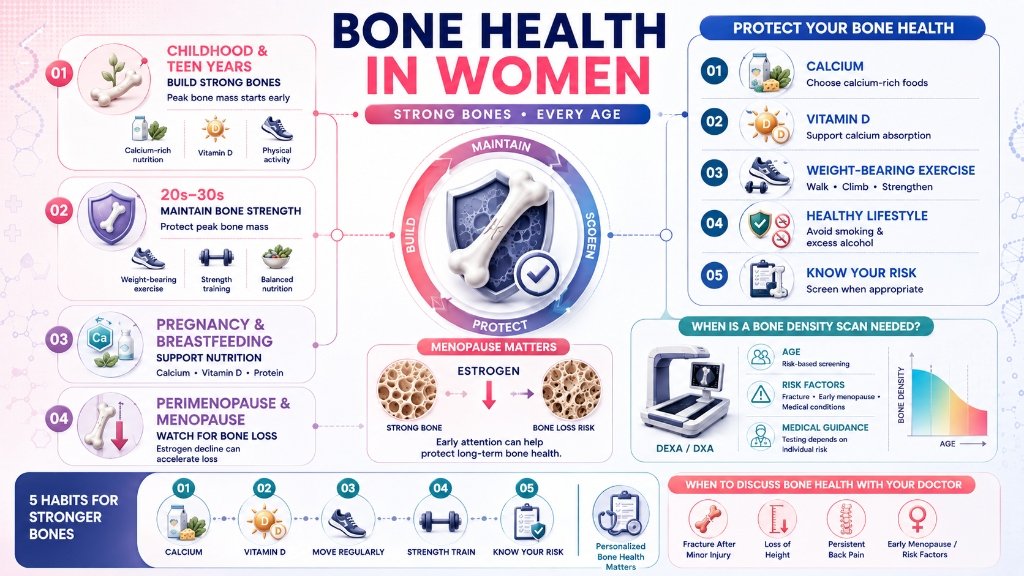
How Does Bone Health Change With Age?
Your bone-health priorities can change as you move through different stages of life.
| Life Stage | What Happens to Bone Health? | What Can Help? |
|---|---|---|
| Childhood & Adolescence | Bone formation is very active and peak bone mass is being established. | Balanced nutrition, calcium and vitamin D, and regular physical activity |
| 20s–30s | Bone mass is generally near its peak and maintenance becomes important. | Weight-bearing exercise, strength training, nutritious food, and healthy lifestyle habits |
| Pregnancy & Breastfeeding | Calcium requirements and bone metabolism can change during this period. | Adequate nutrition and individualized medical guidance |
| Perimenopause | Hormonal changes begin and bone loss may accelerate around the menopausal transition. | Exercise, nutrition, risk assessment, and appropriate medical care |
| Menopause & Early Postmenopause | Reduced estrogen can contribute to faster bone loss. | Weight-bearing exercise, strength training, adequate calcium and vitamin D, and risk assessment |
| Later Postmenopause | Fracture risk generally increases with age. | Fall prevention, exercise, nutrition, screening when indicated, and treatment when necessary |
Why Does Menopause Cause Bone Loss?
Estrogen plays an important role in maintaining bone health.
As ovarian estrogen production decreases around menopause, bone breakdown can temporarily accelerate. ACOG notes that this period of faster bone loss begins around the menopausal transition and continues for several years after the final menstrual period.
The amount of bone loss is not the same for every woman.
Your individual risk can also be influenced by:
- Age
- Family history of osteoporosis or fractures
- Previous fractures
- Physical inactivity
- Smoking
- Excessive alcohol consumption
- Low body weight
- Certain medical conditions
- Long-term use of some medications, including corticosteroids
This is why menopause care should include more than managing hot flashes or menstrual changes. For women at increased risk, discussing bone health with a gynecologist or menopause specialist can be an important part of preventive care.
What Are the Warning Signs of Low Bone Density?
Osteoporosis is often called a "silent disease" because low bone density may not cause obvious symptoms until a fracture occurs.
Possible warning signs include:
- A fracture after a minor fall or low-impact injury
- Persistent or unexplained back pain
- Noticeable loss of height
- A change toward a stooped posture
- Repeated fractures
A fracture that occurs from relatively minor trauma should be medically evaluated because it can be a sign of reduced bone strength.
Do not wait for a major fracture before discussing osteoporosis risk with your doctor.
What Foods Help Support Strong Bones?
Nutrition provides the building blocks needed for healthy bones.
Calcium is important for maintaining bone structure, while vitamin D helps the body absorb calcium.
Calcium-rich foods can include:
- Milk
- Yogurt
- Cheese
- Green leafy vegetables
- Calcium-fortified foods
- Certain nuts and seeds
- Fish with edible bones, such as sardines
Vitamin D can be obtained from certain foods, fortified foods, and sunlight exposure, although individual requirements vary.
A balanced diet should also provide adequate protein, vegetables, fruits, and other nutrients that support overall health.
Do Women Need Calcium and Vitamin D Supplements?
Not necessarily.
Some women may need supplements when dietary intake is inadequate or when a healthcare professional identifies a specific need. Taking more supplements than necessary is not automatically better, and calcium supplements can have potential risks, including an increased risk of kidney stones in some circumstances.
If you are considering calcium or vitamin D supplements, discuss the appropriate amount with your doctor rather than choosing a high-dose supplement on your own.
Does Exercise Strengthen Bones?
Yes. Regular physical activity is an important part of maintaining bone health.
Weight-bearing activities place healthy mechanical stress on bones. Resistance or strength training also helps strengthen muscles and bones.
Examples include:
- Brisk walking
- Stair climbing
- Dancing
- Jogging, when appropriate
- Resistance-band exercises
- Strength training with weights
- Other weight-bearing physical activities appropriate for your age and health
Balance-focused activities can also be useful because reducing the risk of falls is an important part of preventing fractures.
If you already have osteoporosis, a previous fracture, significant joint problems, or another medical condition, ask your healthcare professional which exercises are appropriate for you.
Do Smoking and Alcohol Affect Bone Health?
Yes.
Smoking is associated with poorer bone health and increased fracture risk. Excessive alcohol consumption can also negatively affect bone health. Avoiding smoking and limiting alcohol are important lifestyle measures for protecting bones.
Other healthy habits can also help, including:
- Staying physically active
- Maintaining adequate nutrition
- Preventing falls
- Managing medical conditions that affect bone health
- Reviewing medications that may increase fracture risk
When Should Women Get a DEXA or DXA Scan?
A DEXA, also called a DXA scan, is a low-dose X-ray test used to measure bone mineral density.
Not every woman needs a bone-density scan as soon as she reaches menopause.
Current U.S. preventive guidance recommends osteoporosis screening for women aged 65 years and older. For postmenopausal women younger than 65, screening may be appropriate when clinical risk assessment indicates an increased risk of osteoporosis.
Earlier evaluation may be considered in women with risk factors such as:
- A previous fragility fracture
- Strong family history of osteoporosis or hip fracture
- Certain medical conditions
- Long-term use of medications associated with bone loss
- Other factors that increase fracture risk
Your doctor can determine whether a DXA scan or another assessment is appropriate for you.
Can Bone Loss After Menopause Be Prevented?
Bone loss cannot always be completely prevented, but several measures can help reduce bone loss and fracture risk.
These include:
- Staying physically active.
- Performing appropriate weight-bearing and resistance exercises.
- Getting adequate calcium and vitamin D.
- Avoiding smoking.
- Limiting alcohol.
- Preventing falls.
- Identifying osteoporosis risk factors early.
- Having a bone-density assessment when medically indicated.
- Discussing treatment options if osteoporosis or high fracture risk is diagnosed.
Some women may require medication to reduce fracture risk. Treatment should be individualized according to bone density, fracture history, age, risk factors, and overall health.
How Can Women Protect Bone Health During Menopause?
Menopause is an important time to review your overall health.
Along with managing symptoms such as hot flashes, sleep changes, or vaginal symptoms, your doctor may discuss:
- Bone-health risk factors
- Exercise habits
- Calcium and vitamin D intake
- Smoking and alcohol use
- Family history
- Previous fractures
- Medications
- Whether osteoporosis screening is appropriate
- Whether treatment is needed based on your individual risk
A gynecologist or menopause specialist can help identify concerns and decide whether additional evaluation is necessary.
When Should You See a Gynecologist About Bone Health?
Consider discussing bone health with your doctor if you:
- Are approaching or going through menopause
- Have experienced a fracture after a minor injury
- Have unexplained persistent back pain
- Have noticed loss of height
- Have a strong family history of osteoporosis
- Have been told that you have low bone density
- Take medicines that may weaken bones
- Have a medical condition associated with increased osteoporosis risk
- Are unsure whether you need a DXA scan
If you are searching for a gynecologist near me for menopause or women's health concerns, an individualized consultation can help determine which preventive steps are appropriate for you.
Doctor's Note
"Bone health should be considered throughout a woman's life rather than only after a fracture occurs. The years around menopause are particularly important because hormonal changes can accelerate bone loss. At Medfemme Women's Clinic, we consider your age, medical history, lifestyle, fracture risk, and menopausal stage when discussing appropriate bone-health care."
— Dr. Priyanka Bhargava, Medfemme Women's Clinic, Kanpur
Protect Your Bone Health With Personalized Women's Care in Kanpur
Bone health is an important part of overall women's health at every stage of life.
Whether you are approaching menopause, already experiencing menopausal changes, or concerned about osteoporosis risk, an individualized evaluation can help identify the right next steps.
Dr. Priyanka Bhargava at Medfemme Women's Clinic, Kanpur provides women's healthcare and menopause-focused guidance based on each patient's individual needs.
If you are looking for a Top Gynecologist in Kanpur, a lady gynecologist in Kanpur, or a women wellness clinic for menopause and women's health concerns, discuss your symptoms and risk factors with a qualified healthcare professional.
Frequently Asked Questions About Women's Bone Health
What Should You Remember About Bone Health?
Strong bones are built and maintained over a lifetime.
Good nutrition, regular weight-bearing and resistance exercise, avoiding smoking, limiting alcohol, preventing falls, and identifying osteoporosis risk factors can all contribute to healthier bones.
Menopause is an important time to reassess bone health because declining estrogen can accelerate bone loss. However, not every woman needs the same tests, supplements, or treatment.
If you are concerned about bone health, menopause, or osteoporosis risk, speak with a qualified healthcare professional for an individualized assessment.
Dr. Priyanka Bhargava at Medfemme Women's Clinic, Kanpur can provide personalized women's healthcare and menopause-related guidance based on your individual health needs.
Medical Review
Medically reviewed by Dr. Priyanka Bhargava, Medfemme Women's Clinic, Kanpur.
Medical Disclaimer
This article is intended for general educational purposes and does not replace individual medical consultation, diagnosis, or treatment. Bone-health recommendations, screening, supplements, and treatment depend on individual age, medical history, risk factors, and clinical assessment. Speak with a qualified healthcare professional for personalized advice.
Warning Signs of Low Bone Density
Osteoporosis is often a silent disease until a fracture occurs. Speak with a healthcare professional promptly if you experience a fracture after a minor fall, persistent unexplained back pain, or noticeable loss of height.
Frequently Asked Questions
At what age should women start thinking about bone health?
Bone health should be considered throughout life. Childhood and adolescence are important for building peak bone mass, while adulthood focuses on maintaining bone strength. Menopause is another important period because declining estrogen can accelerate bone loss.
Why does menopause cause bone loss?
Estrogen helps protect bone tissue. When estrogen levels decrease around menopause, bone loss can accelerate, particularly during the menopausal transition and early postmenopausal years.
What is a DEXA or DXA scan?
A DXA scan is a low-dose X-ray test that measures bone mineral density. It is commonly used to identify osteoporosis and assess fracture risk. Screening recommendations depend on age and individual risk factors.
Can exercise improve bone health?
Yes. Weight-bearing activities and resistance training can help maintain or improve bone strength. Exercise can also improve muscle strength and balance, which may help reduce fall risk.
Do all women need calcium supplements after menopause?
No. Supplement requirements depend on dietary intake, age, health conditions, and individual risk. It is better to discuss your nutritional needs with a healthcare professional rather than automatically taking high-dose calcium supplements.
Can bone loss after menopause be treated?
Yes. Depending on the individual's bone density and fracture risk, treatment can include lifestyle measures and, when appropriate, prescription medicines. The treatment plan should be based on individual risk assessment.
What are the early warning signs of osteoporosis?
Osteoporosis may have no noticeable symptoms. A fracture after a minor fall, unexplained back pain, loss of height, or changes in posture can warrant medical evaluation.
When should I see a menopause specialist?
Consider speaking with a menopause specialist or gynecologist if you are experiencing menopause-related symptoms, have concerns about bone loss, have osteoporosis risk factors, or want to understand whether you need screening or preventive care.