
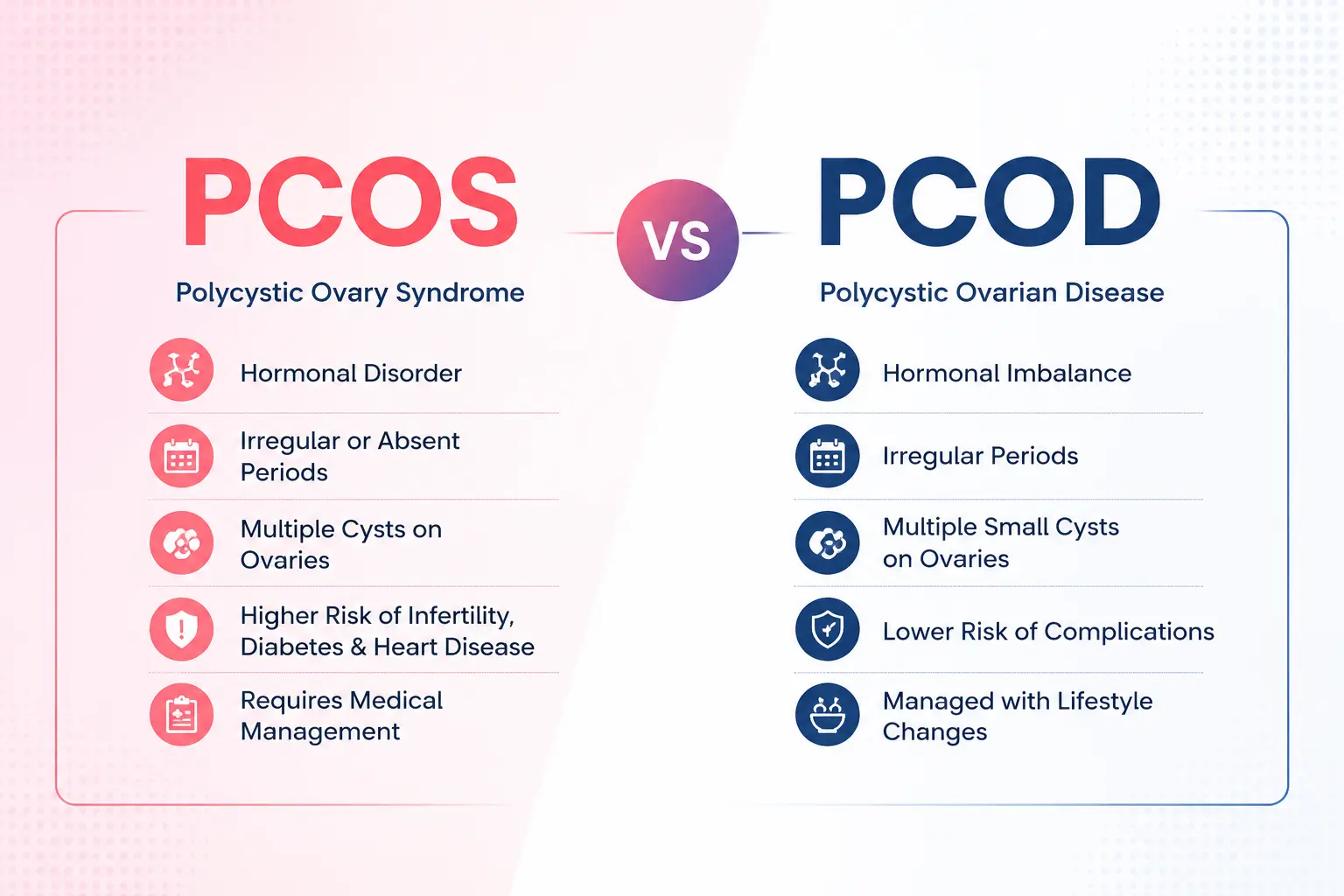
PCOS vs PCOD – Understanding the Difference

iKey Takeaways
- ✓PCOD is generally a milder metabolic condition, while PCOS is a more complex hormonal disorder with higher health risks.
- ✓Both conditions share overlapping symptoms like irregular periods, weight gain, and acne, so self-diagnosis is unreliable.
- ✓PCOS carries a higher risk of infertility, insulin resistance, and long-term conditions like diabetes if left unmanaged.
- ✓An accurate diagnosis through ultrasound and hormone testing is essential for choosing the right treatment path.
Many women use the terms PCOS and PCOD interchangeably, assuming they are the same condition. While they are related and share several symptoms, they are actually two distinct hormonal conditions with different causes, severity, and treatment approaches. At Medfemme Women's Clinic in Kanpur, Dr. Priyanka Bhargava frequently helps women untangle this confusion so they can get the right diagnosis and the right care.
What is PCOD?
PCOD (Polycystic Ovarian Disease) is a condition in which the ovaries produce a large number of immature or partially mature eggs, which eventually turn into cysts. It is a fairly common condition, affecting a significant percentage of women of reproductive age. PCOD is generally considered a milder metabolic condition, and many women with PCOD can still ovulate, conceive, and manage the condition well with lifestyle changes.
What is PCOS?
PCOS (Polycystic Ovary Syndrome) is a more serious hormonal and metabolic disorder. It involves an imbalance of reproductive hormones, particularly elevated androgens (male hormones), which interferes with ovulation. Women with PCOS often face insulin resistance, irregular or absent periods, and a higher risk of complications like infertility, type 2 diabetes, and cardiovascular issues if left unmanaged.
Key Differences Between PCOS and PCOD
| Aspect | PCOD | PCOS |
|---|---|---|
| Nature | Metabolic condition | Endocrine (hormonal) disorder |
| Severity | Generally milder | Can be more severe |
| Ovulation | Often continues, though irregular | Frequently disrupted |
| Fertility impact | Usually manageable | Higher risk of infertility |
| Hormonal imbalance | Mild | Significant, especially androgens |
| Long-term risks | Lower | Higher risk of diabetes, heart disease |
| Management | Diet and lifestyle changes often sufficient | May need medical treatment alongside lifestyle changes |
Common Symptoms Shared by Both
- Irregular or missed periods
- Weight gain, particularly around the abdomen
- Acne and oily skin
- Excess facial or body hair (hirsutism)
- Hair thinning or hair loss
- Difficulty conceiving
Because the symptoms overlap so much, self-diagnosis is unreliable. A proper evaluation is essential to know which condition you're dealing with.
How Are They Diagnosed?
Dr. Priyanka Bhargava typically recommends a combination of:
- Pelvic ultrasound to check the ovaries for cysts
- Blood tests to measure hormone levels, including androgens, insulin, and thyroid function
- Menstrual history review to understand cycle patterns
- Physical examination to assess signs like hirsutism or acne
This combination helps distinguish PCOD from PCOS and rules out other conditions with similar symptoms, such as thyroid disorders.
Treatment Approaches
For PCOD:
- Balanced diet with reduced sugar and refined carbohydrates
- Regular physical activity
- Weight management
- Stress reduction
For PCOS:
- All of the above, plus
- Medications to regulate hormones and menstrual cycles
- Insulin-sensitizing medication where insulin resistance is present
- Fertility treatment if conception is a concern
- Long-term monitoring for diabetes and cardiovascular risk
Why the Distinction Matters
Treating PCOS as if it were simple PCOD — or vice versa — can lead to delayed diagnosis and inadequate management. Since PCOS carries higher long-term health risks, an accurate diagnosis ensures women receive the right level of monitoring and care, especially if they are planning a pregnancy.
When to See a Doctor
If you experience irregular periods, unexplained weight gain, excessive hair growth, persistent acne, or difficulty conceiving, it's worth getting evaluated rather than assuming it's "just PCOD" or "just hormones." Early diagnosis makes management significantly easier.
Dr. Priyanka Bhargava at Medfemme Women's Clinic, Kanpur, offers comprehensive evaluation and personalized treatment plans for both PCOD and PCOS. Book a consultation to understand your condition and the right path forward.
When to Seek Immediate Care
If you experience severe pelvic pain, very heavy or prolonged bleeding, or sudden worsening of symptoms, don't wait for a routine appointment — contact Medfemme Clinic or seek urgent medical care right away.
Frequently Asked Questions
Is PCOD more dangerous than PCOS?
No, generally it's the opposite. PCOS is considered the more serious condition of the two because it involves greater hormonal imbalance, insulin resistance, and higher long-term risks like diabetes and cardiovascular disease. PCOD is usually milder and easier to manage with lifestyle changes.
Can PCOD turn into PCOS over time?
PCOD itself doesn't medically 'convert' into PCOS, as they are different conditions. However, if PCOD is left unmanaged for years, especially with poor diet and no physical activity, the resulting weight gain and insulin resistance can worsen hormonal imbalance and produce a clinical picture that resembles PCOS.
Can women with PCOS or PCOD get pregnant naturally?
Many women with PCOD conceive naturally, often with lifestyle adjustments alone. Women with PCOS may find it more challenging due to irregular ovulation, but many can still conceive naturally or with medical support such as ovulation induction or fertility treatment.
What tests are needed to diagnose PCOS or PCOD?
Diagnosis usually involves a pelvic ultrasound to check the ovaries, blood tests for hormone levels (including androgens and insulin), a review of menstrual history, and a physical examination for symptoms like acne or excess hair growth.
Can PCOS or PCOD be cured completely?
There is no permanent 'cure' for either condition, but both can be effectively managed. With the right combination of diet, exercise, weight management, and, where needed, medication, most women lead healthy lives and manage symptoms well long-term.