
What Is Menstrual Hygiene? Myths, Best Practices & When to See a Gynecologist

iKey Takeaways
- ✓Change menstrual products regularly according to your flow and product instructions.
- ✓Keep the external genital area clean and avoid harsh or strongly fragranced products.
- ✓Bathing and light exercise are generally safe during periods.
- ✓Track your cycle and notice significant changes in bleeding or pain.
- ✓Very heavy bleeding or severe period pain should be discussed with a gynecologist.
Quick Answer: Menstrual hygiene means managing your period safely and comfortably by changing menstrual products regularly, maintaining gentle external hygiene, washing your hands before and after changing products, and paying attention to unusual symptoms.
What Is Menstrual Hygiene?
Menstrual hygiene includes the everyday practices used to manage your period safely and comfortably. This includes using appropriate menstrual products, changing them regularly, maintaining personal hygiene, and disposing of used products properly.
Good menstrual hygiene also means knowing which period symptoms are normal and which may need medical attention.
What Are Common Menstrual Hygiene Myths?
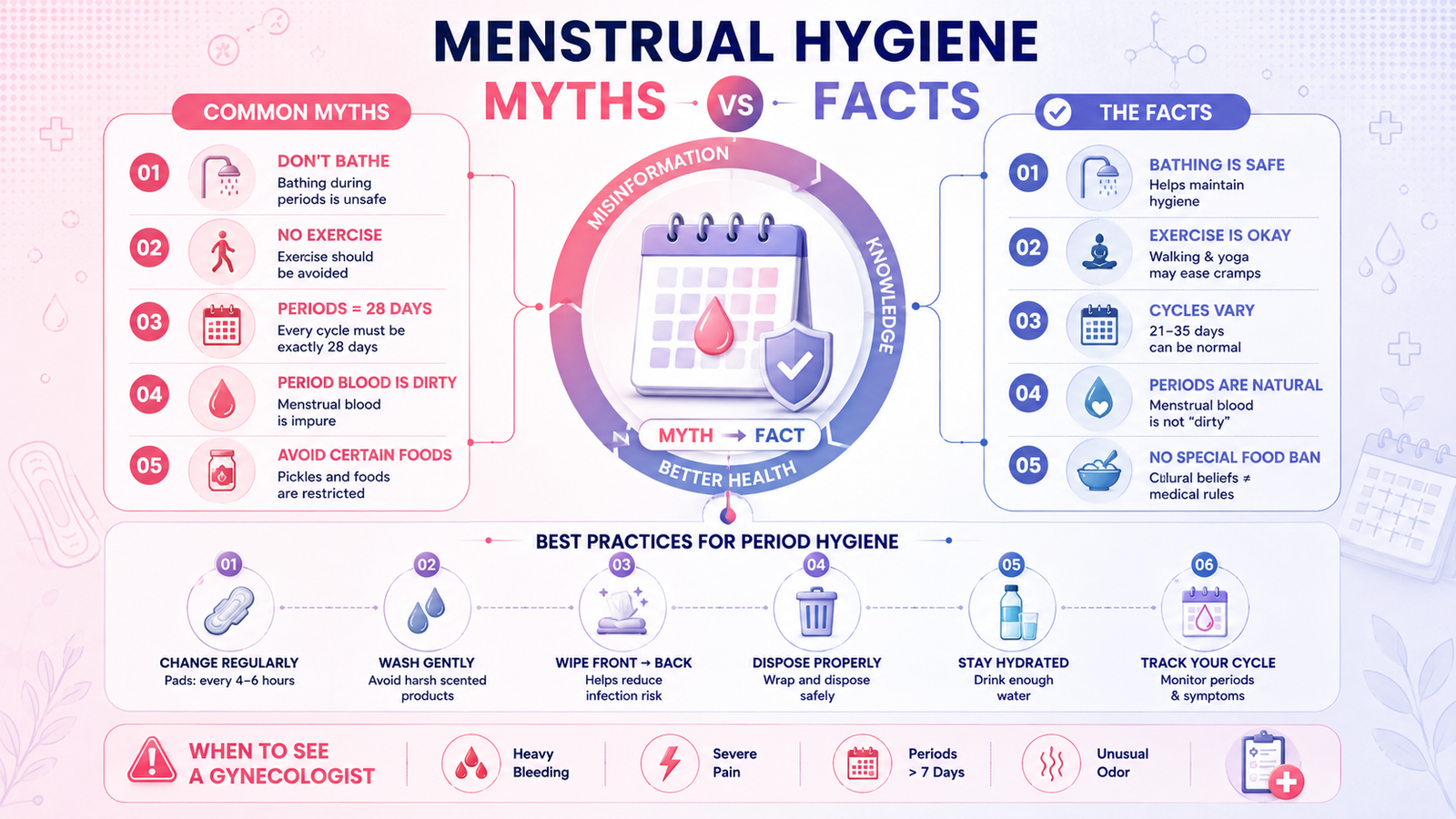
Many beliefs about periods are cultural or based on misinformation. Here are some common myths and the facts behind them:
| Myth | Fact |
|---|---|
| You should not bathe during your period. | Bathing is safe during menstruation and can help you feel clean and comfortable. Warm water may also help with cramps. |
| You should avoid exercising during your period. | Most women can exercise safely during their period. Walking, stretching, and yoga may help with cramps and mood. |
| Tampons affect virginity. | Tampon use does not determine virginity. Virginity cannot be medically determined by the appearance of the hymen. |
| Periods must come exactly every 28 days. | Menstrual cycles can vary. A cycle does not have to be exactly 28 days for it to be normal. |
| Certain foods must always be avoided during periods. | There is no universal medical rule requiring women to avoid specific foods during menstruation. |
| Menstrual blood is dirty or impure. | Menstrual blood is a normal part of the menstrual cycle and is not dirty or impure. |
| Vaginal douching is necessary during periods. | The vagina is self-cleaning. Gentle cleaning of the external genital area is generally sufficient. |
| Severe period pain is always normal. | Severe pain should not be ignored, especially when it interferes with daily activities. |
What Are the Best Menstrual Hygiene Practices?
How often should I change my sanitary pad?
Change your pad every few hours or sooner if it becomes wet or heavily saturated. Your menstrual flow and the product instructions should guide how frequently you change it.
How often should I change a tampon?
Follow the product instructions and avoid wearing a tampon longer than recommended. Many tampons are changed every 4-8 hours.
How should I clean myself during my period?
Gently clean the external genital area with water. Avoid harsh soaps, strongly fragranced products, or vaginal douching if they cause irritation.
How should I dispose of menstrual products?
Wrap used disposable products before placing them in an appropriate waste bin. Do not flush pads or tampons down the toilet.
Should I track my menstrual cycle?
Yes. Tracking your period dates, flow, pain, and other symptoms can help you understand your usual cycle and identify significant changes.
When Should I See a Gynecologist for Period Problems?
You should consider consulting a gynecologist if you experience:
- Very heavy menstrual bleeding
- Periods that last unusually long
- Severe pain affecting daily activities
- Suddenly irregular periods
- Bleeding between periods
- Bleeding after sexual intercourse
- Unusual or foul-smelling discharge
- Dizziness or significant weakness associated with heavy bleeding
These symptoms do not always indicate a serious condition, but persistent or significant changes should be evaluated.
When to Seek Professional Guidance
Menstrual hygiene is an important part of women's health, but persistent changes in your periods should not be ignored.
If you have concerns about your periods, menstrual hygiene, abnormal bleeding, or period pain, Dr. Priyanka Bhargava at Medfemme Women's Clinic, Kanpur can provide professional guidance based on your individual symptoms.
Medically reviewed by: Dr. Priyanka Bhargava, Medfemme Women's Clinic, Kanpur
Medical Disclaimer: This article is for general educational purposes and does not replace individual medical advice, diagnosis, or treatment. Consult a qualified healthcare professional for persistent or concerning symptoms.
When to See a Gynecologist
If you experience very heavy bleeding, periods lasting unusually long, severe pain, bleeding between periods or after intercourse, foul-smelling discharge, or dizziness with heavy bleeding, consult Dr. Priyanka Bhargava at Medfemme Clinic promptly.
Frequently Asked Questions
Is it safe to bathe during periods?
Yes. Bathing during menstruation is safe and can help maintain personal hygiene and comfort.
Can I exercise during my period?
Yes. Most women can continue normal physical activity during menstruation. Choose an intensity that feels comfortable for you.
Is period pain normal?
Mild cramps can be common, but severe or worsening pain that interferes with daily life should be evaluated by a gynecologist.
How often should I change a sanitary pad?
Change your pad every few hours or sooner when it becomes wet or heavily saturated.
When should I see a gynecologist for heavy periods?
Consult a gynecologist if your bleeding is unusually heavy, prolonged, frequently disrupts daily activities, or causes symptoms such as dizziness or significant weakness.