
Pregnancy Care
High-Risk Pregnancy – Causes, Risks, and How to Ensure a Healthy Pregnancy

Pregnancy is a beautiful journey, but some pregnancies require additional medical attention and monitoring. These are known as high-risk pregnancies.
What is a High-Risk Pregnancy?
A pregnancy may be considered high-risk if the mother has pre-existing medical conditions such as:
- Diabetes
- Thyroid disorders
- High blood pressure
- Heart disease
Risk Factors
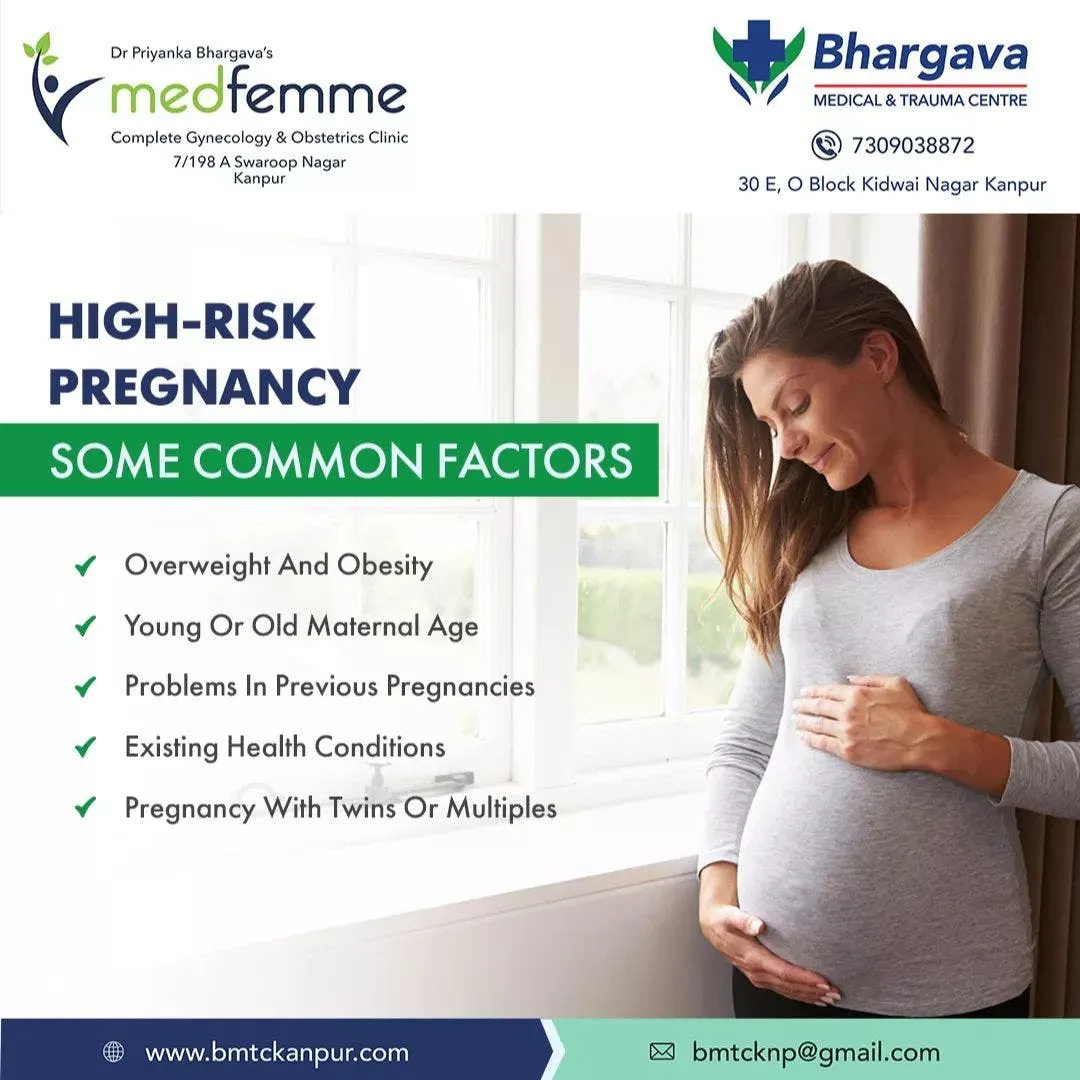
- Age: Women younger than 18 or older than 35.
- Multiple Pregnancies: Twins or triplets.
- Previous Complications: History of miscarriages or preterm birth.
- Lifestyle: Obesity, smoking, or poor nutrition.
Common Warning Signs
Contact your doctor immediately if you experience:
- Vaginal bleeding
- Severe abdominal pain
- Blurred vision
- Severe swelling
- Persistent headaches
- Reduced fetal movements
Managing a High-Risk Pregnancy
- Regular antenatal check-ups.
- Following a healthy, doctor-recommended diet.
- Timely screening tests and continuous monitoring.
Frequently Asked Questions
What makes a pregnancy high-risk?
Factors like age (under 18 or over 35), pre-existing conditions (diabetes, BP), or multiple babies (twins).
Can a high-risk pregnancy be normal?
Yes, with proper monitoring and medical guidance, most high-risk pregnancies result in healthy babies.
How often do I need check-ups?
High-risk pregnancies usually require more frequent visits and specialized scans.
What are the warning signs?
Bleeding, severe abdominal pain, blurred vision, or reduced fetal movement.
Where can I find high-risk pregnancy care in Kanpur?
Dr. Priyanka Bhargava at Medfemme Clinic specializes in managing high-risk cases.