
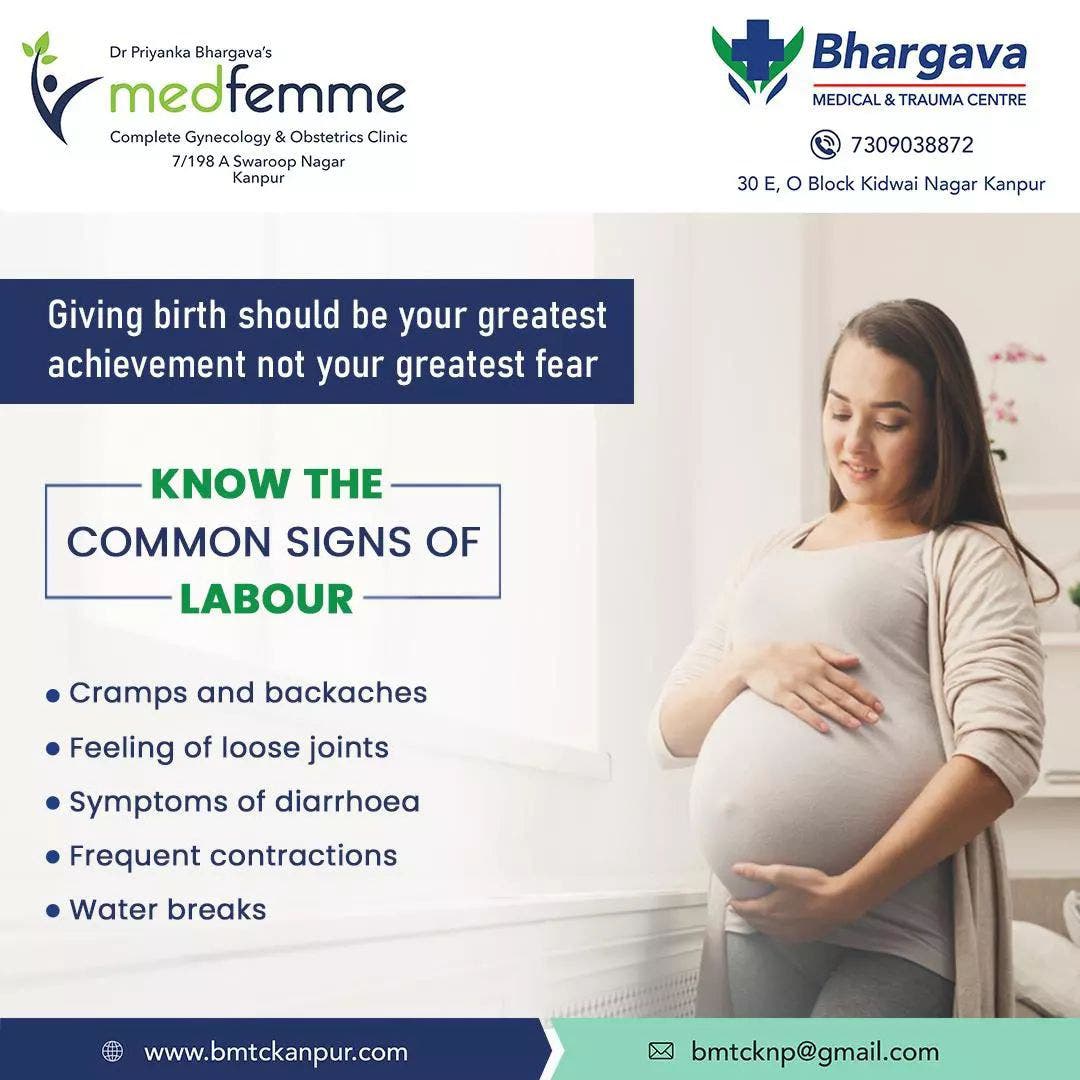
Common Signs of Labour Every Expecting Mother Should Know

As your due date approaches, it is natural to wonder whether labour has started. Understanding the common signs of labour can help you seek timely medical care.
What is Labour?
Labour is the process through which the body prepares for childbirth. While every pregnancy is different, there are several signs that commonly indicate labour may be beginning.
Early Signs
- Back Pain: Persistent lower back pain or cramps.
- Pelvic Pressure: Increased pressure as the baby moves lower.
- Digestive Changes: Some women notice loose stools or diarrhea.
True Labour Signs
Regular Contractions
Unlike Braxton Hicks, true labour contractions become stronger, longer, and occur at regular intervals.
Water Breaking
The rupture of membranes may occur as a sudden gush or a slow trickle of fluid.
When to Contact Your Doctor
- If contractions become regular and intense.
- If your water breaks.
- If you experience bleeding.
- If you notice decreased fetal movement.
Frequently Asked Questions
What do early labour contractions feel like?
Like strong menstrual cramps or persistent back pain.
What is the "bloody show"?
A small amount of mucus and blood that indicates labour is near.
How do I know if my water broke?
It can be a sudden gush or a slow, continuous trickle of fluid.
What are Braxton Hicks contractions?
These are "practice" contractions that are irregular and go away with movement.
When should I call my doctor?
If contractions are regular (every 5 mins), your water breaks, or you have bleeding.