
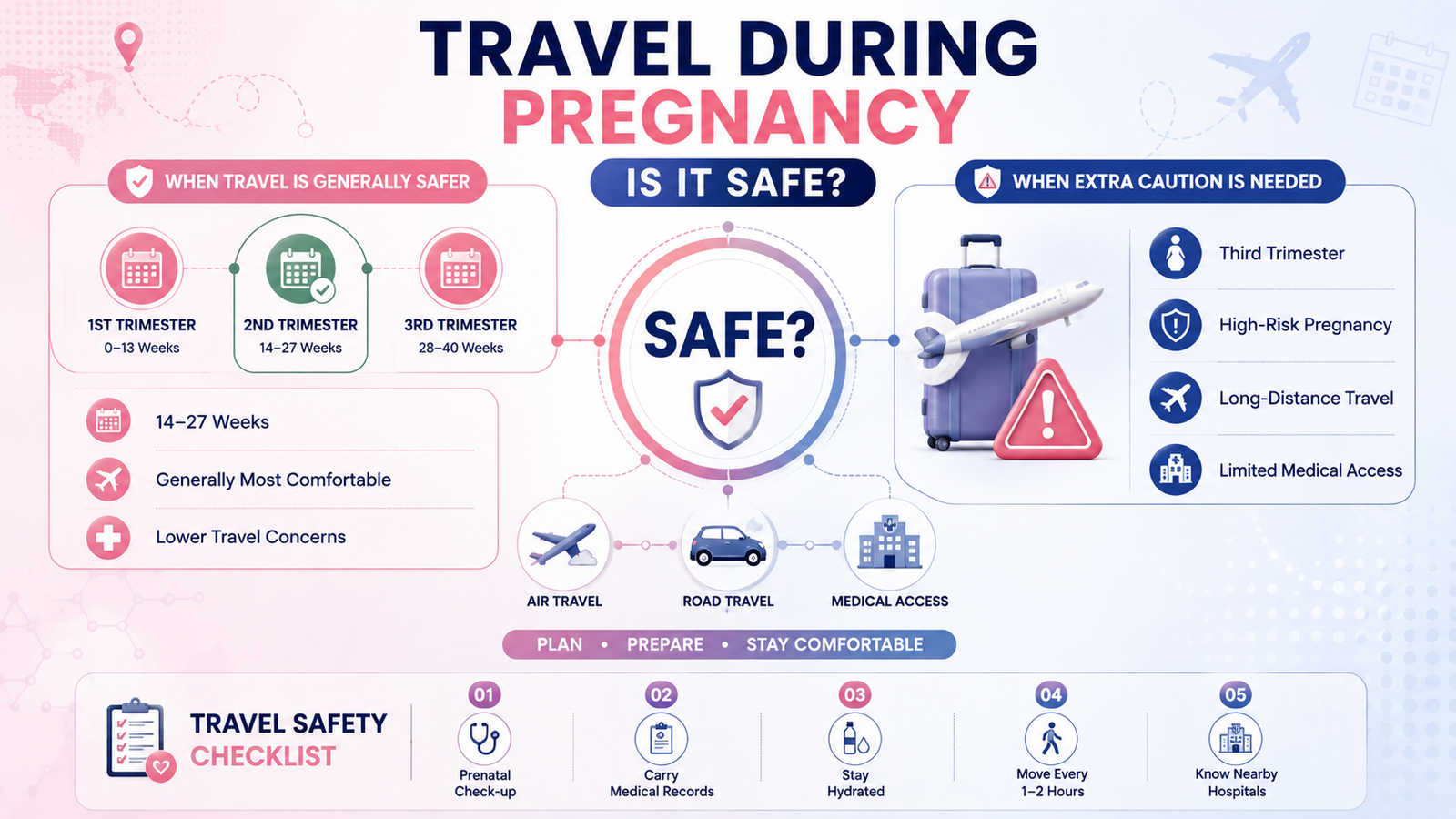
Travel During Pregnancy – Is It Safe?

iKey Takeaways
- ✓The second trimester is generally the safest and most comfortable time to travel during pregnancy.
- ✓Air travel is usually safe up to about 36 weeks, but always confirm airline policy and carry a doctor's note after 28 weeks.
- ✓Certain conditions, like preeclampsia, placenta previa, or a history of preterm labor, make travel riskier and warrant a doctor's consultation first.
- ✓Always research medical care access at your destination and carry your prenatal records when traveling.
Travel is often unavoidable, whether for work, a family event, or simply a much-needed babymoon before the baby arrives. The good news is that for most women with a healthy, low-risk pregnancy, travel is generally safe. However, timing, mode of transport, and a few precautions can make a significant difference to your comfort and safety. Dr. Priyanka Bhargava, pregnancy specialist at Medfemme Women's Clinic, a women wellness clinic in Kanpur, shares what every expecting mother should know before planning a trip.
Is It Safe to Travel During Pregnancy?
In most uncomplicated pregnancies, travel does not pose a risk to mother or baby. That said, safety depends on several factors:
- Which trimester you're in
- Your overall health and any pregnancy complications
- The mode of transport (car, train, or flight)
- The distance and duration of the trip
- Access to medical care at your destination
Always consult your pregnancy specialist before finalizing travel plans, especially for long-distance or international trips.
Best Time to Travel
The second trimester (weeks 14 to 27) is generally considered the safest and most comfortable window for travel. By this stage, early pregnancy symptoms like nausea and fatigue have usually eased, energy levels are better, and the risk of miscarriage is lower than in the first trimester. Travel in the third trimester is generally discouraged for longer trips, since the risk of complications like preterm labor increases closer to the due date.
Air Travel During Pregnancy
Flying is usually safe for healthy pregnancies up to a certain point, but keep these guidelines in mind:
- Most airlines allow travel up to 36 weeks for single pregnancies, though this varies, so always check with the airline directly
- Carry a letter from your doctor confirming your due date and fitness to fly, especially after 28 weeks
- Choose an aisle seat for easier movement and bathroom access
- Walk around or flex your ankles periodically to reduce the risk of blood clots
- Stay well hydrated, as cabin air is dry
Road Trips and Car Travel
- Wear your seatbelt properly, with the lap belt under your belly and the shoulder strap across your chest
- Take breaks every 1-2 hours to stretch and walk around
- Keep snacks, water, and any prescribed medication within reach
- Avoid long drives alone in the third trimester
Precautions to Take Before Any Trip
- Schedule a prenatal check-up before traveling to confirm it's safe to do so
- Carry your maternity medical records and prenatal reports with you
- Research hospitals or clinics near your destination, and look up a trusted gynecologist near me at your travel location, in case of an emergency
- Get comprehensive travel insurance that covers pregnancy-related care
- Avoid destinations with active outbreaks of infections like Zika, malaria, or other region-specific health risks
- Stay up to date on which vaccines are safe during pregnancy before international travel
When Travel Should Be Avoided
Certain situations make travel riskier and should prompt a conversation with a high-risk pregnancy doctor in Kanpur before booking anything:
- History of preterm labor or miscarriage
- Multiple pregnancy (twins or more)
- Placenta previa or other placental complications
- Pregnancy-induced hypertension or preeclampsia
- Gestational diabetes that isn't well controlled
- Any bleeding or unusual symptoms in the current pregnancy
Tips for a Comfortable Journey
- Wear loose, comfortable clothing and supportive footwear
- Use a small pillow for lower back or neck support
- Eat small, frequent meals to manage nausea and energy levels
- Avoid standing or sitting in one position for too long
- Listen to your body and don't hesitate to slow down or rest
Final Thoughts
Traveling during pregnancy is often perfectly safe with the right precautions and planning. The key is timing your trip well, staying informed about your specific health status, and having a plan in place should you need medical care while away from home.
Planning a trip during your pregnancy? Dr. Priyanka Bhargava, best obstetrician in Kanpur at Medfemme Women's Clinic, can help assess whether it's safe for your specific situation and guide you on precautions to take. Book a gynecology consultation in Kanpur before you travel.
When to Avoid Travel or Seek Immediate Care
If you experience bleeding, severe abdominal pain, contractions, reduced fetal movement, or symptoms of preeclampsia while traveling, seek medical attention immediately and contact your doctor at Medfemme Clinic as soon as possible.
Frequently Asked Questions
Which trimester is safest for traveling during pregnancy?
The second trimester, roughly weeks 14 to 27, is generally considered the safest and most comfortable time to travel. Nausea and fatigue from early pregnancy have usually subsided, and the risk of complications is lower than in the first or third trimester.
Is it safe to fly during pregnancy?
Flying is generally safe for healthy pregnancies, though most airlines restrict travel after 36 weeks for single pregnancies. It's a good idea to carry a doctor's letter confirming your due date and fitness to fly, especially after 28 weeks.
Can pregnant women travel in the third trimester?
Travel in the third trimester is generally discouraged, especially for long trips, due to increased risk of preterm labor and reduced access to your regular medical team. Always check with your doctor before planning travel this late in pregnancy.
What precautions should I take before traveling while pregnant?
Schedule a prenatal check-up before your trip, carry your medical records, research hospitals at your destination, get travel insurance that covers pregnancy care, and avoid regions with active disease outbreaks.
Is a road trip safe during pregnancy?
Yes, road trips are generally safe with precautions like wearing your seatbelt correctly, taking breaks every 1-2 hours to stretch and move, staying hydrated, and avoiding very long drives, especially alone, in the third trimester.